Deskripsi
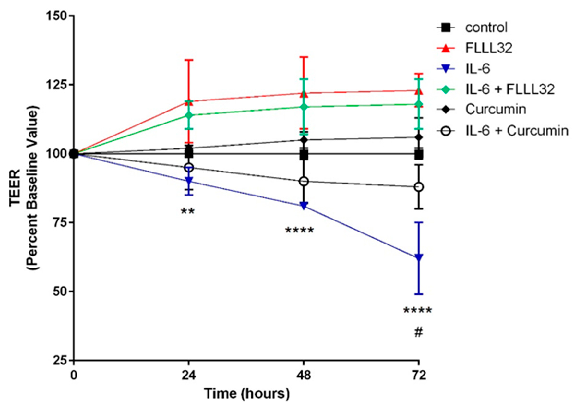
FLLL32 (a curcumin analogue) and curcumin both protect against IL-6-induced reduction of transepithelial electrical resistance (TEER) in T84 cell monolayers. This graph shows that curcumin preserves intestinal barrier integrity by counteracting cytokine-mediated tight junction disruption over 72 hours.
More Figures from This Paper
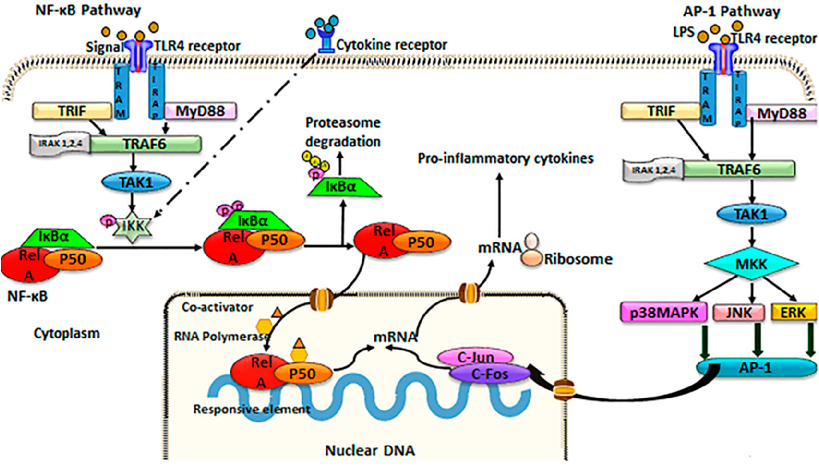
Figure 5
TLR4/NF-kB/AP-1 signaling is a key inflammatory pathway in intestinal disease. This schematic illustrates the cascade from TLR4 receptor activation through NF-kB and AP-1 transcription factors to pro-inflammatory gene expression, and indicates where curcumin may intervene.
diagram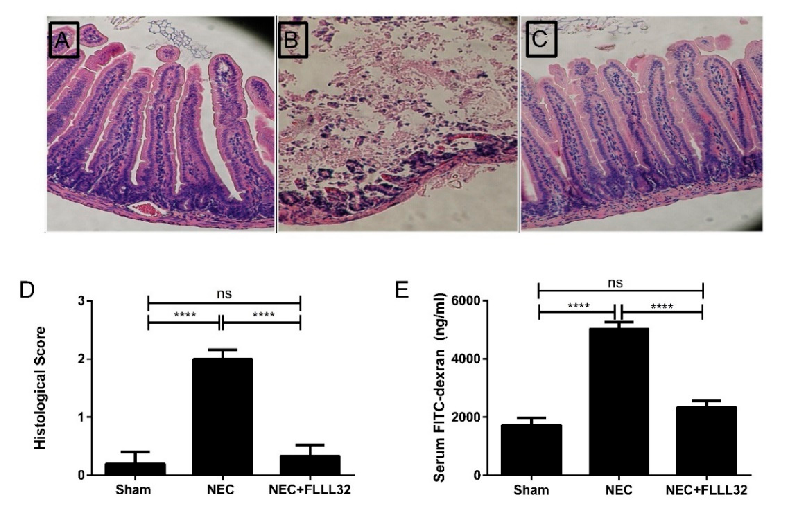
Figure 7
Curcumin's effects on intestinal tight junction proteins have been demonstrated in multiple experimental models. This figure presents protein expression or immunofluorescence data showing curcumin-mediated preservation of barrier function.
chart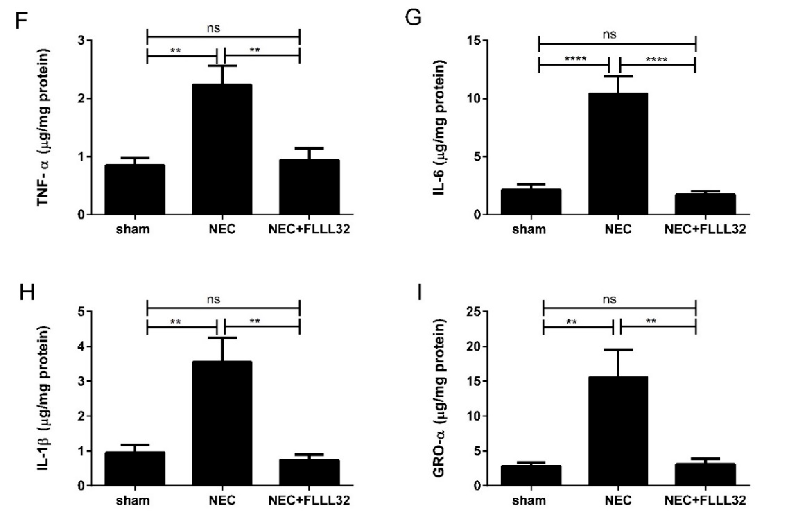
Figure 8
Animal models of necrotizing enterocolitis and colitis respond favorably to curcumin treatment. This figure presents in vivo data on curcumin's protective effects in experimental intestinal inflammation.
chartFigure 6
ChartSource Paper
Curcumin and Intestinal Inflammatory Diseases: Molecular Mechanisms of Protection.Cite This Figure
 > Source: Kathryn Burge et al. "Curcumin and Intestinal Inflammatory Diseases: Molecular Mechanisms of Protectio." *International journal of molecular sciences*, 2019. PMID: [31003422](https://pubmed.ncbi.nlm.nih.gov/31003422/)
<figure>
  <img src="https://pdfs.citedhealth.com/figures/31003422/181.png" alt="FLLL32 (a curcumin analogue) and curcumin both protect against IL-6-induced reduction of transepithelial electrical resistance (TEER) in T84 cell monolayers. This graph shows that curcumin preserves intestinal barrier integrity by counteracting cytokine-mediated tight junction disruption over 72 hours." />
  <figcaption>Figure 6. FLLL32 (a curcumin analogue) and curcumin both protect against IL-6-induced reduction of transepithelial electrical resistance (TEER) in T84 cell monolayers. This graph shows that curcumin preserves intestinal barrier integrity by counteracting cytokine-mediated tight junction disruption over 72 hours.<br>  Source: Kathryn Burge et al. "Curcumin and Intestinal Inflammatory Diseases: Molecular Mechanisms of Protectio." <em>International journal of molecular sciences</em>, 2019. PMID: <a href="https://pubmed.ncbi.nlm.nih.gov/31003422/">31003422</a></figcaption>
</figure>