Descrição
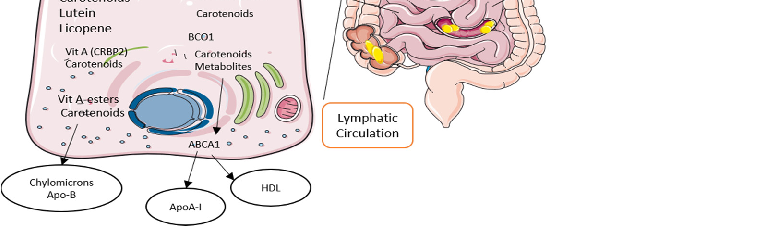
Marine carotenoids follow specific uptake, transport, and secretion pathways in the human body. This figure traces the journey of dietary xanthophylls from intestinal absorption through lymphatic transport to tissue distribution and hepatic metabolism.
More Figures from This Paper
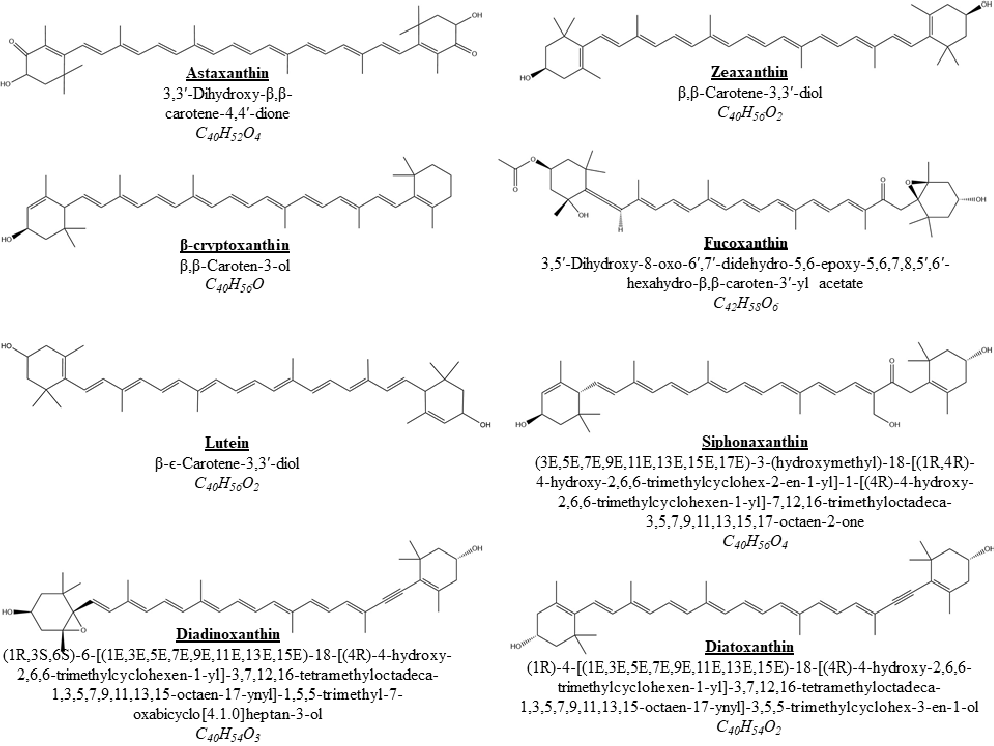
Figure 6
Marine algae produce several structurally distinct xanthophylls with unique bioactive profiles. This figure displays the chemical structures of the main xanthophylls present in algae, including fucoxanthin, astaxanthin, zeaxanthin, and lutein.
diagram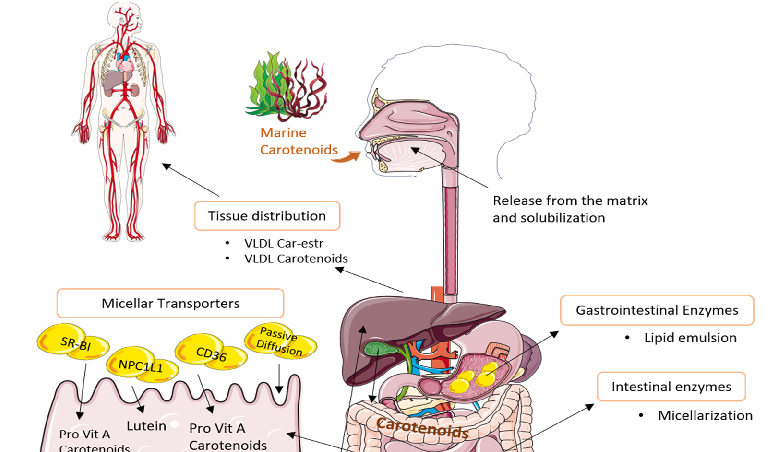
Figure 7
Bioavailability and metabolism of dietary xanthophylls determine their physiological impact. This figure presents data on the absorption, distribution, and metabolic fate of algal carotenoids in biological systems.
diagramFigure 8
Diagram
770 × 226px
· 110,6 KB
Source Paper
Xanthophylls from the Sea: Algae as Source of Bioactive Carotenoids.Cite This Figure
 > Source: Antia G Pereira et al. "Xanthophylls from the Sea: Algae as Source of Bioactive Carotenoids.." *Marine drugs*, 2021. PMID: [33801636](https://pubmed.ncbi.nlm.nih.gov/33801636/)
<figure>
  <img src="https://pdfs.citedhealth.com/figures/33801636/489.png" alt="Marine carotenoids follow specific uptake, transport, and secretion pathways in the human body. This figure traces the journey of dietary xanthophylls from intestinal absorption through lymphatic transport to tissue distribution and hepatic metabolism." />
  <figcaption>Figure 8. Marine carotenoids follow specific uptake, transport, and secretion pathways in the human body. This figure traces the journey of dietary xanthophylls from intestinal absorption through lymphatic transport to tissue distribution and hepatic metabolism.<br>  Source: Antia G Pereira et al. "Xanthophylls from the Sea: Algae as Source of Bioactive Carotenoids.." <em>Marine drugs</em>, 2021. PMID: <a href="https://pubmed.ncbi.nlm.nih.gov/33801636/">33801636</a></figcaption>
</figure>