描述
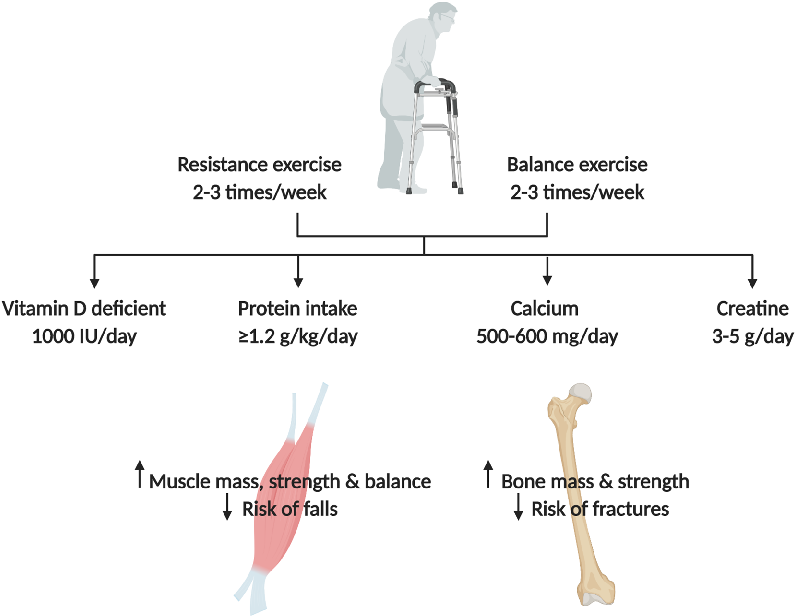
Outcome data from intervention studies targeting both bone and muscle health in osteosarcopenic patients are compared across different therapeutic approaches.
More Figures from This Paper
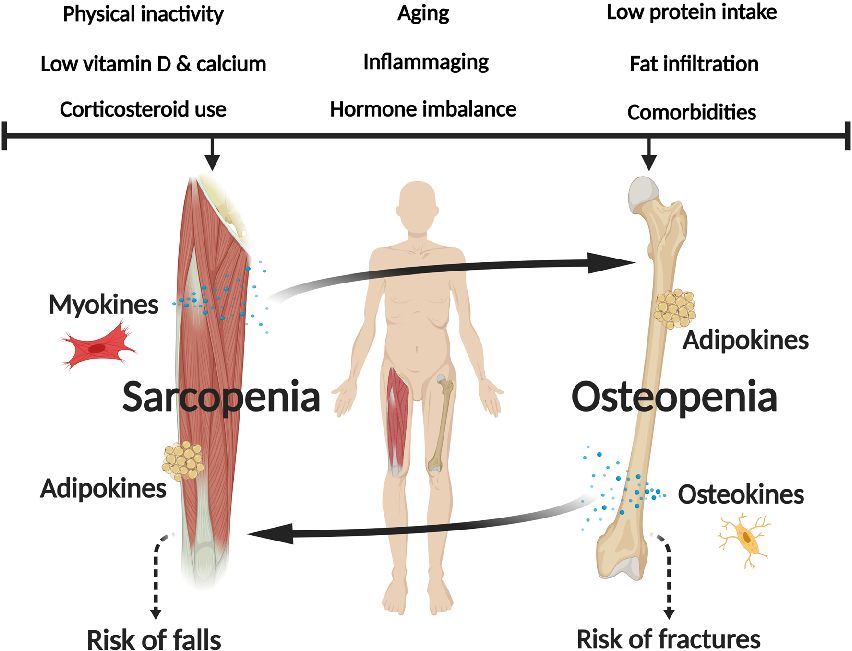
Figure 3
Pathophysiological mechanisms shared between osteoporosis and sarcopenia are diagrammed, including hormonal, nutritional, and mechanical loading factors.
diagram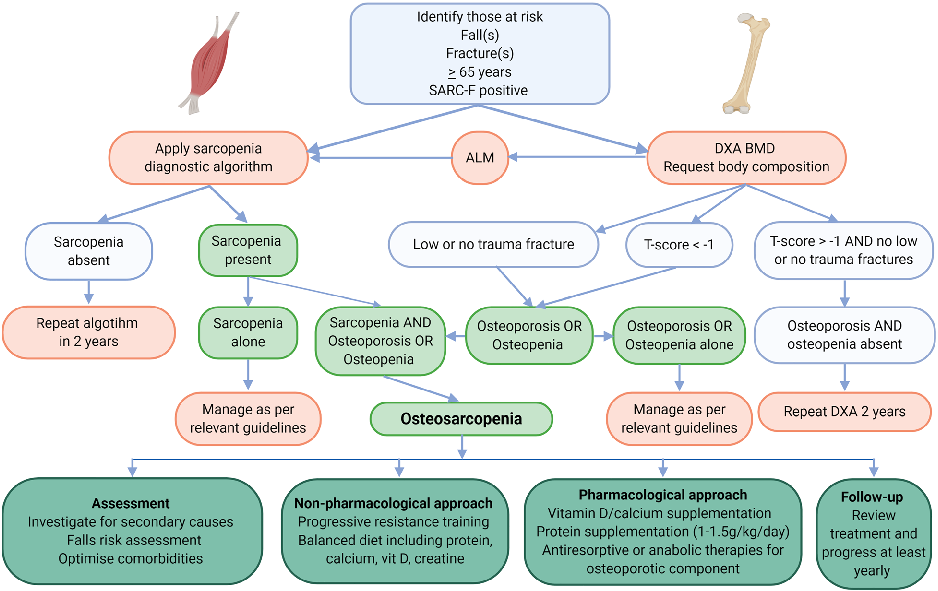
Figure 4
Treatment algorithms for osteosarcopenia incorporating exercise, nutritional supplementation, and pharmacological interventions are outlined.
flowchartFigure 5
Chart
795 × 616px
· 84.1 KB
Source Paper
Osteosarcopenia: epidemiology, diagnosis, and treatment-facts and numbers.Cite This Figure
 > Source: Ben Kirk et al. "Osteosarcopenia: epidemiology, diagnosis, and treatment-facts and numbers.." *Journal of cachexia, sarcopenia and muscle*, 2020. PMID: [32202056](https://pubmed.ncbi.nlm.nih.gov/32202056/)
<figure>
  <img src="https://pdfs.citedhealth.com/figures/32202056/128.png" alt="Outcome data from intervention studies targeting both bone and muscle health in osteosarcopenic patients are compared across different therapeutic approaches." />
  <figcaption>Figure 5. Outcome data from intervention studies targeting both bone and muscle health in osteosarcopenic patients are compared across different therapeutic approaches.<br>  Source: Ben Kirk et al. "Osteosarcopenia: epidemiology, diagnosis, and treatment-facts and numbers.." <em>Journal of cachexia, sarcopenia and muscle</em>, 2020. PMID: <a href="https://pubmed.ncbi.nlm.nih.gov/32202056/">32202056</a></figcaption>
</figure>