Beschreibung
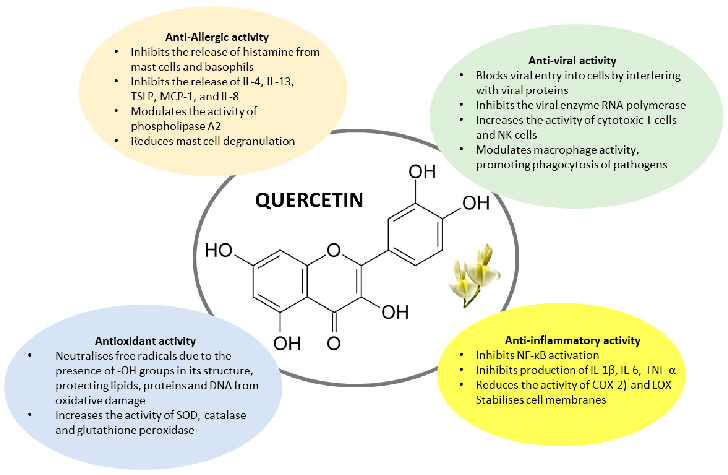
Chemical structure of quercetin and illustration of its mechanisms of action, including anti-inflammatory, antioxidant, and immunomodulatory pathways relevant to allergic conditions.
More Figures from This Paper
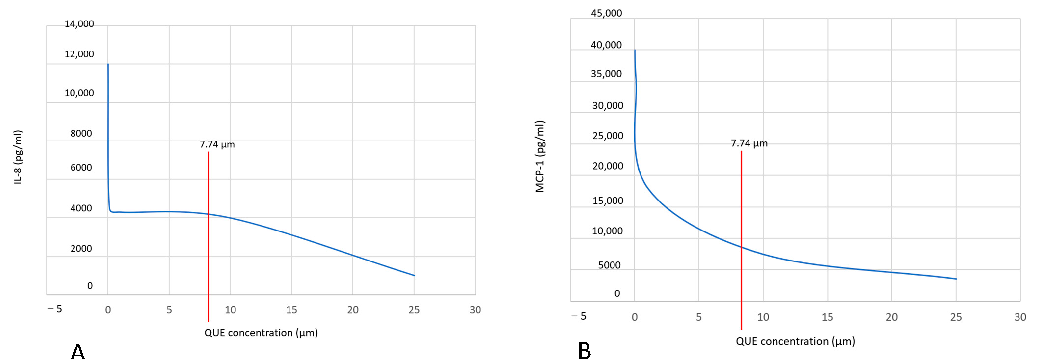
Figure 2
Pharmacological or clinical data supporting quercetin's potential applications for allergic rhinitis, asthma, or related inflammatory conditions.
chart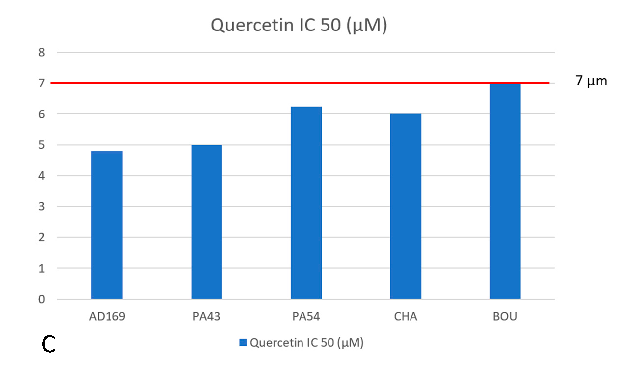
Figure 3
Comparative efficacy data for quercetin in different formulations, examining the impact of delivery systems on therapeutic outcomes.
chart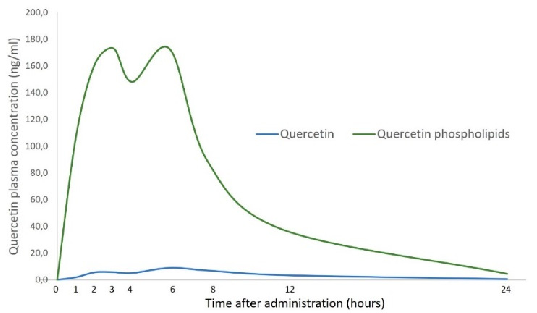
Figure 4
Plasma concentration curves comparing standard quercetin and its lecithin-based (phytosomal) formulation, demonstrating enhanced oral bioavailability of the lipid-based delivery system.
chartFigure 1
Diagram
728 × 475px
· 168,1 KB
Source Paper
Quercetin and Its Lecithin-Based Formulation: Potential Applications for Allergic Diseases Based on a Narrative Review.Cite This Figure
 > Source: Matteo Naso et al. "Quercetin and Its Lecithin-Based Formulation: Potential Applications for Allergi." *Nutrients*, 2025. PMID: [40362785](https://pubmed.ncbi.nlm.nih.gov/40362785/)
<figure>
  <img src="https://pdfs.citedhealth.com/figures/40362785/116.png" alt="Chemical structure of quercetin and illustration of its mechanisms of action, including anti-inflammatory, antioxidant, and immunomodulatory pathways relevant to allergic conditions." />
  <figcaption>Figure 1. Chemical structure of quercetin and illustration of its mechanisms of action, including anti-inflammatory, antioxidant, and immunomodulatory pathways relevant to allergic conditions.<br>  Source: Matteo Naso et al. "Quercetin and Its Lecithin-Based Formulation: Potential Applications for Allergi." <em>Nutrients</em>, 2025. PMID: <a href="https://pubmed.ncbi.nlm.nih.gov/40362785/">40362785</a></figcaption>
</figure>