説明
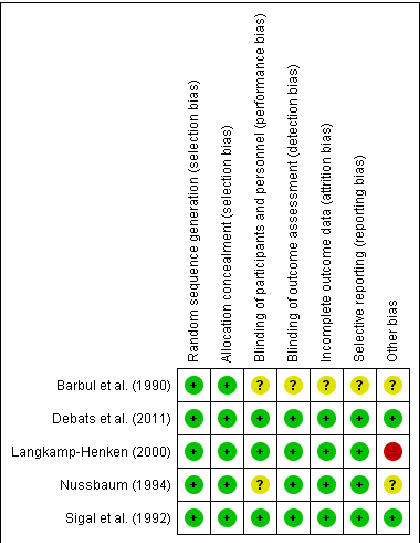
Risk of bias is summarized for each included arginine study using green (low risk), yellow (unclear), and red (high risk) indicators. The visual matrix helps readers quickly assess methodological quality across randomization, blinding, and outcome reporting domains.
More Figures from This Paper
Figure 6
PRISMA flow diagram details the screening and selection process for studies on glutamine supplementation and wound healing. From the initial database search, studies were filtered through title screening, abstract review, and full-text assessment.
flowchart
Figure 7
Characteristics of included studies on arginine supplementation for wound healing are summarized in tabular form. The table captures study design, participant demographics, dosage protocols, and primary outcome measures across the selected trials.
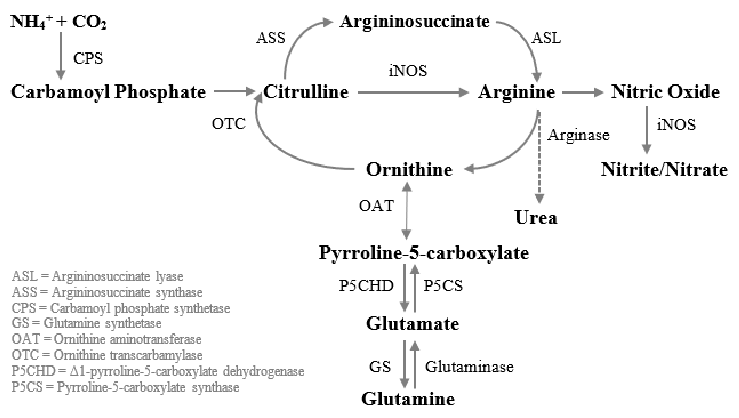
Figure 8
Glutamine-to-arginine metabolism in human macrophages is mapped, showing the conversion of carbamoyl phosphate and ornithine to citrulline via ornithine transcarbamylase, and subsequent transformation to argininosuccinate. This pathway is central to understanding how glutamine supports immune-mediated wound repair.
diagram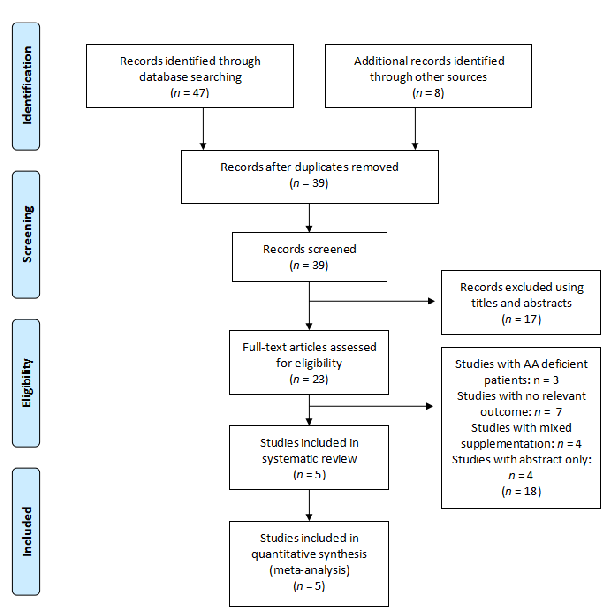
Figure 9
Study characteristics for the glutamine supplementation arm of the systematic review are presented. The compilation enables cross-study comparison of dosing regimens, wound types, and healing outcomes measured in human trials.
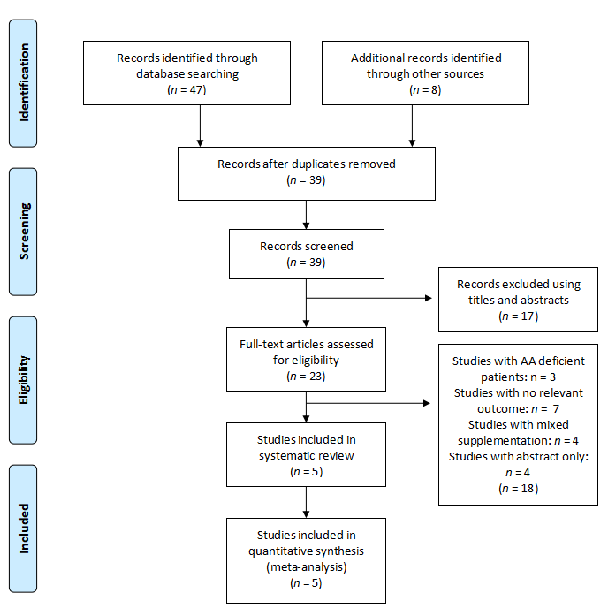
Figure 10
Risk of bias assessment for arginine studies is displayed using the Cochrane tool framework. Each domain of potential bias is evaluated across the included trials to gauge the overall quality of evidence supporting arginine supplementation for wound healing.
chart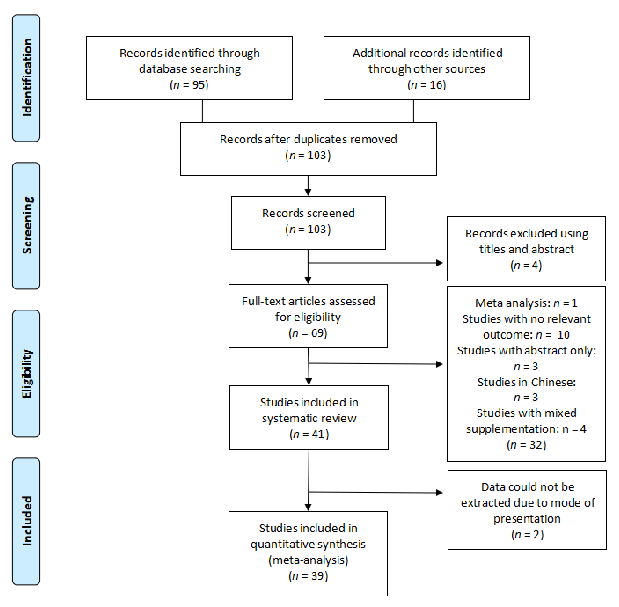
Figure 11
Risk of bias assessment for glutamine studies complements the arginine evaluation. The systematic assessment of selection, performance, detection, attrition, and reporting bias helps contextualize the strength of conclusions about glutamine and wound repair.
chartFigure 13
ChartSource Paper
The Effect of Amino Acids on Wound Healing: A Systematic Review and Meta-Analysis on Arginine and Glutamine.Cite This Figure
 > Source: Elena Arribas-López et al. "The Effect of Amino Acids on Wound Healing: A Systematic Review and Meta-Analysi." *Nutrients*, 2021. PMID: [34444657](https://pubmed.ncbi.nlm.nih.gov/34444657/)
<figure>
  <img src="https://pdfs.citedhealth.com/figures/34444657/171.png" alt="Risk of bias is summarized for each included arginine study using green (low risk), yellow (unclear), and red (high risk) indicators. The visual matrix helps readers quickly assess methodological quality across randomization, blinding, and outcome reporting domains." />
  <figcaption>Figure 13. Risk of bias is summarized for each included arginine study using green (low risk), yellow (unclear), and red (high risk) indicators. The visual matrix helps readers quickly assess methodological quality across randomization, blinding, and outcome reporting domains.<br>  Source: Elena Arribas-López et al. "The Effect of Amino Acids on Wound Healing: A Systematic Review and Meta-Analysi." <em>Nutrients</em>, 2021. PMID: <a href="https://pubmed.ncbi.nlm.nih.gov/34444657/">34444657</a></figcaption>
</figure>