描述
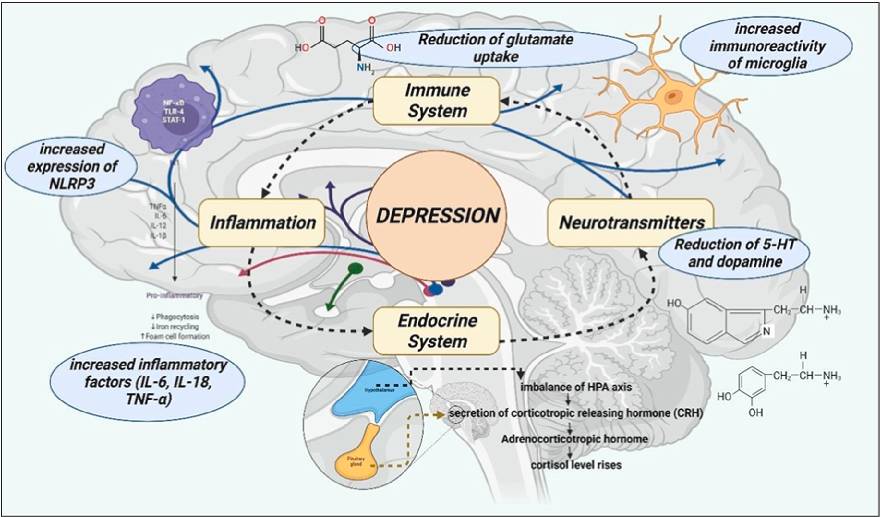
Brain insulin resistance mechanisms underlying depression are depicted, showing how HPA axis dysregulation, reduced anterior cingulate cortex volume, and impaired hippocampal function contribute to the condition.
More Figures from This Paper
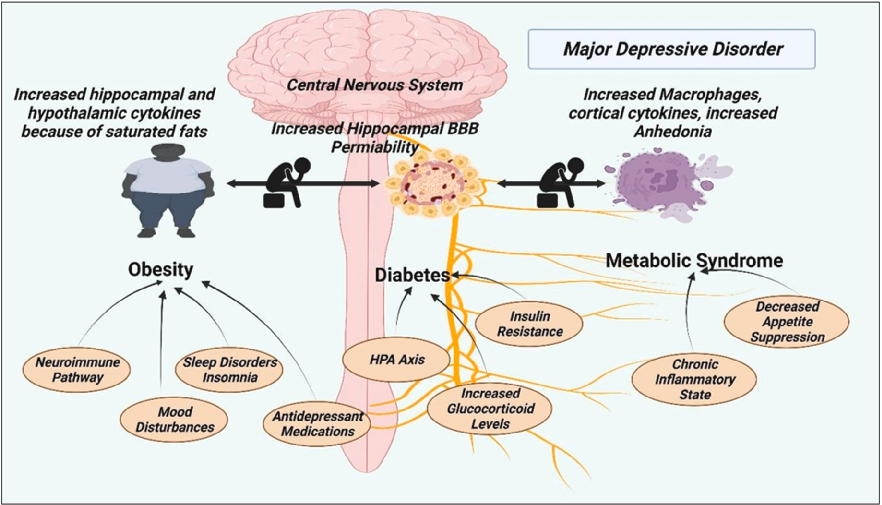
Figure 4
Obesity, diabetes, and metabolic syndrome are illustrated as metabolic diseases that commonly coexist with depression, highlighting their shared pathophysiological mechanisms through chronic low-grade inflammation.
diagram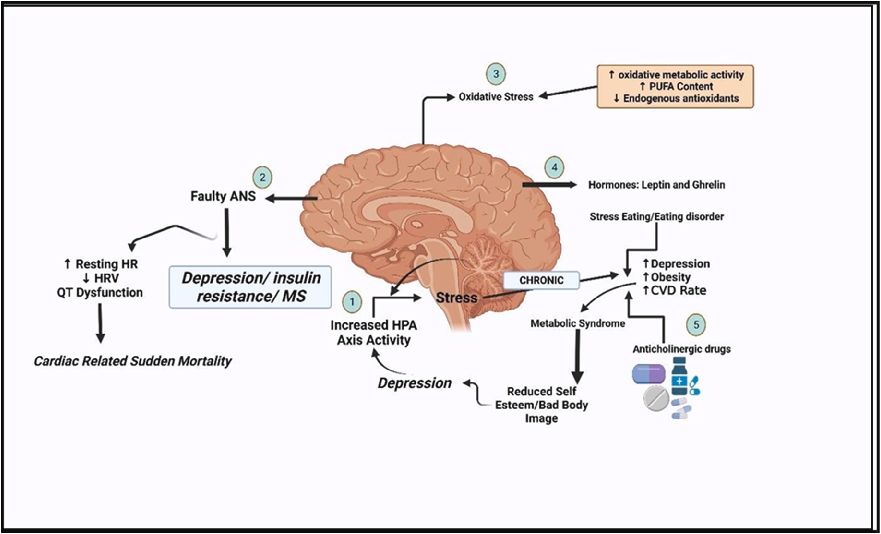
Figure 5
Molecular pathways connecting stress-induced inflammation to insulin resistance are detailed, tracing how inflammatory signaling cascades impair insulin receptor substrate phosphorylation.
diagram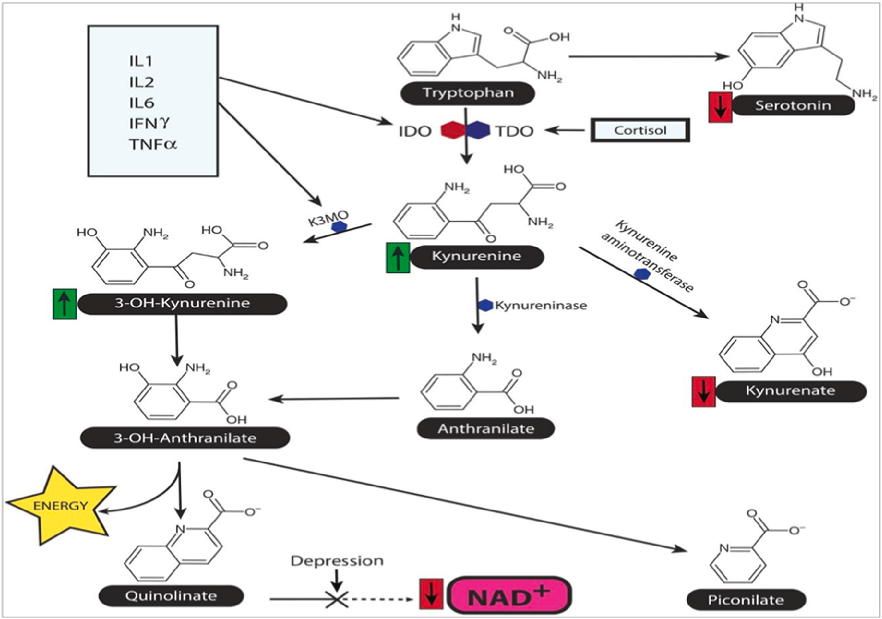
Figure 6
Bidirectional relationships between depression and metabolic disturbances are outlined, showing how each condition exacerbates the other through shared inflammatory and neuroendocrine mechanisms.
diagram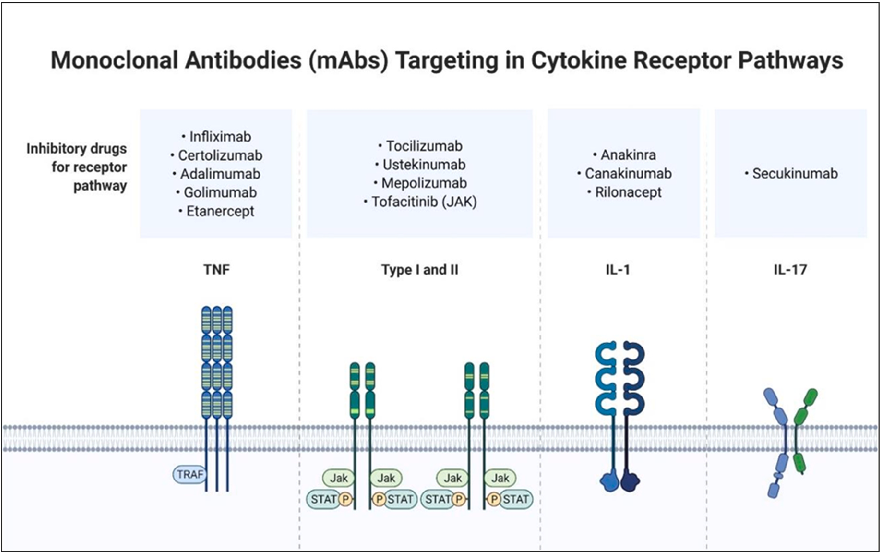
Figure 7
Treatment options for major depressive disorders are presented, including pharmacological, psychological, and lifestyle interventions that address the inflammatory-metabolic axis.
diagram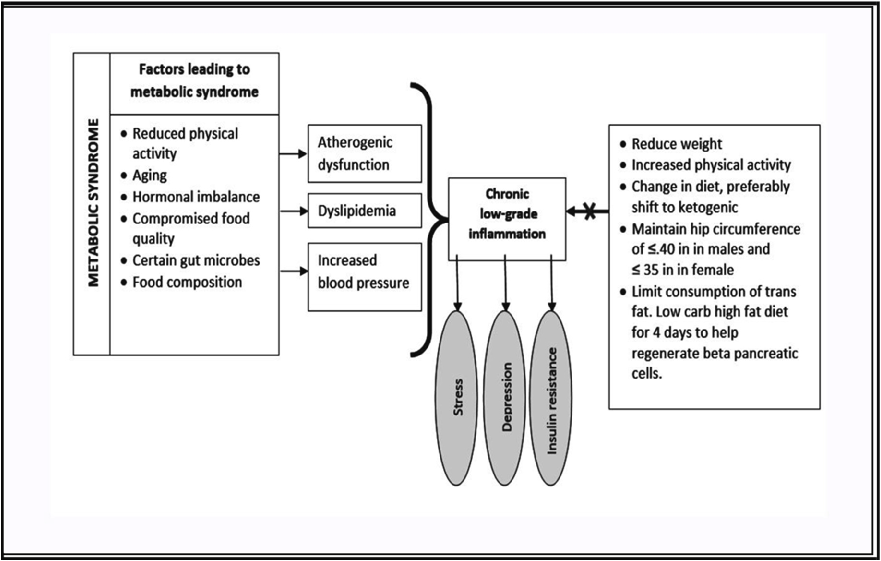
Figure 8
A schematic representation maps the factors contributing to metabolic syndrome alongside corresponding dietary and lifestyle modifications that may alleviate these conditions, integrating evidence on stress management and anti-inflammatory nutrition.
diagramFigure 3
DiagramSource Paper
A review on linking stress, depression, and insulin resistance via low-grade chronic inflammation.Cite This Figure
 > Source: Seema Mehdi et al. "A review on linking stress, depression, and insulin resistance via low-grade chr." *Biochemistry and biophysics reports*, 2023. PMID: [37965066](https://pubmed.ncbi.nlm.nih.gov/37965066/)
<figure>
  <img src="https://pdfs.citedhealth.com/figures/37965066/123.png" alt="Brain insulin resistance mechanisms underlying depression are depicted, showing how HPA axis dysregulation, reduced anterior cingulate cortex volume, and impaired hippocampal function contribute to the condition." />
  <figcaption>Figure 3. Brain insulin resistance mechanisms underlying depression are depicted, showing how HPA axis dysregulation, reduced anterior cingulate cortex volume, and impaired hippocampal function contribute to the condition.<br>  Source: Seema Mehdi et al. "A review on linking stress, depression, and insulin resistance via low-grade chr." <em>Biochemistry and biophysics reports</em>, 2023. PMID: <a href="https://pubmed.ncbi.nlm.nih.gov/37965066/">37965066</a></figcaption>
</figure>