Quercetin Figures
3 figures from peer-reviewed research
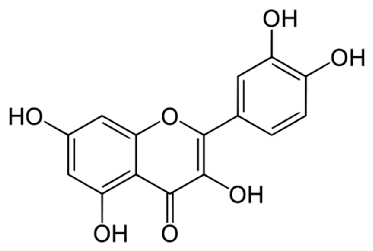
Chemical structure of quercetin (3,3',4',5,7-pentahydroxyflavone) is displayed, showing the hydroxyl groups on the flavonoid backbone that contribute to its antioxidant and anti-allergic properties.
Quercetin and Its Anti-Allergic Immune Response.
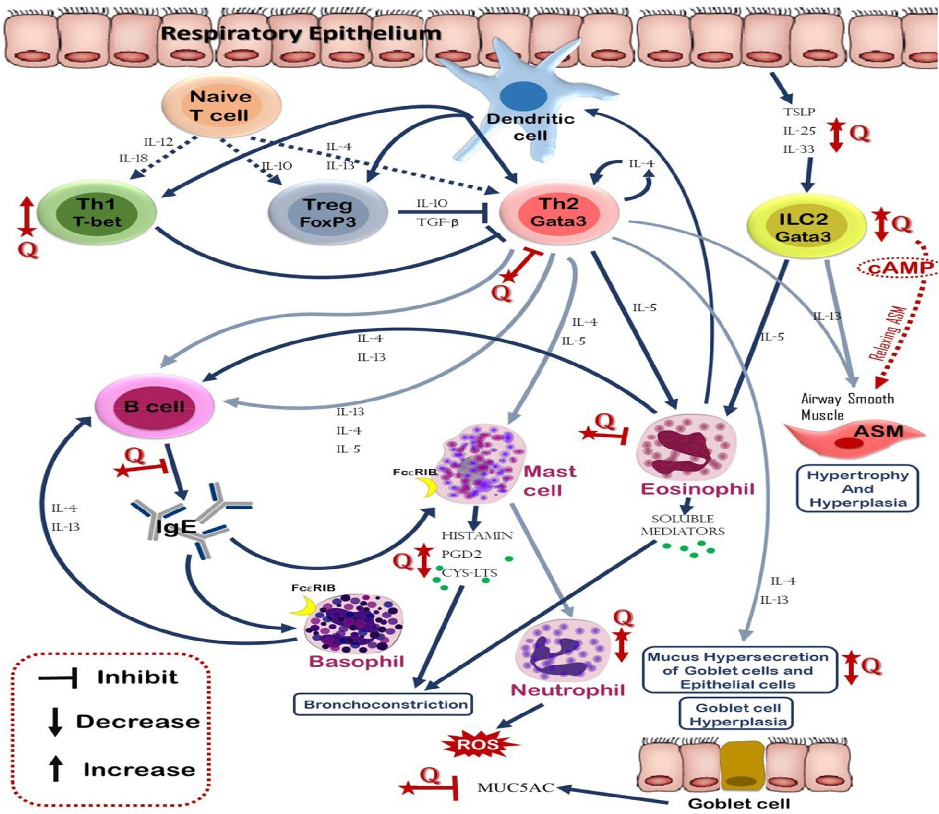
Quercetin exerts multiple effects on immune cells involved in asthma pathogenesis. This diagram maps quercetin's influence on eosinophils, mast cells, T-cells, and airway epithelial cells, highlighting its potential as a multi-target anti-asthmatic agent.
Quercetin with the potential effect on allergic diseases.
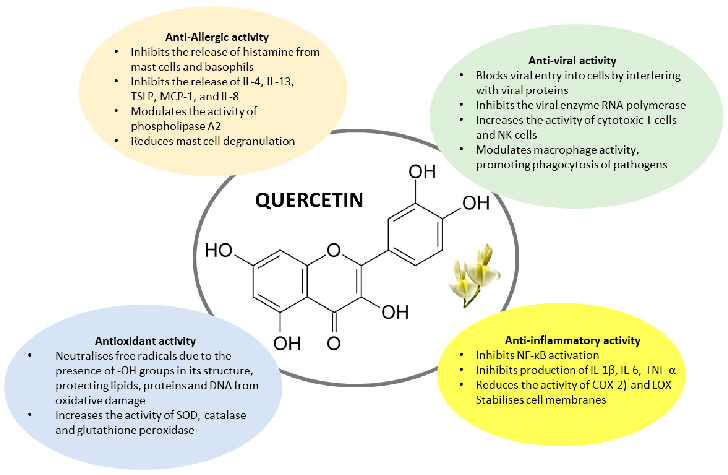
Chemical structure of quercetin and illustration of its mechanisms of action, including anti-inflammatory, antioxidant, and immunomodulatory pathways relevant to allergic conditions.
Quercetin and Its Lecithin-Based Formulation: Potential Applications for Allergic Diseases Based on …