विवरण
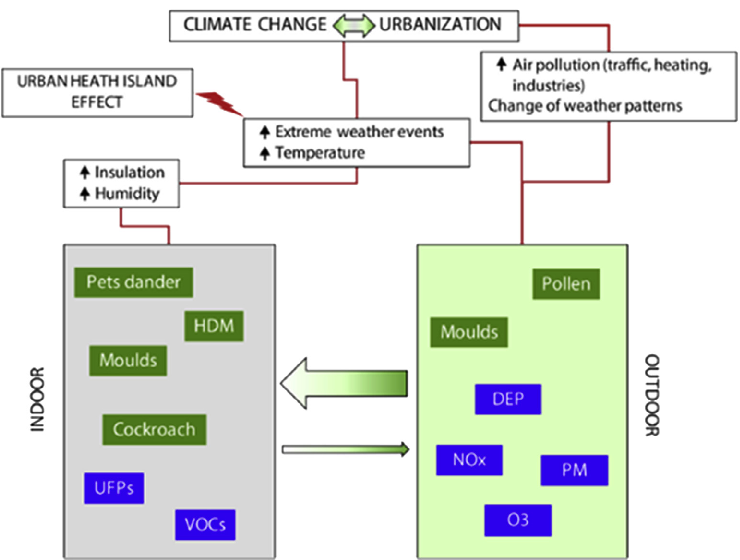
Diesel exhaust particles, nitrogen oxides, particulate matter, ground-level ozone, and volatile organic compounds interact with allergens to worsen allergic rhinitis. This figure maps how these pollutants enhance house dust mite sensitization and modulate allergic airway responses.
More Figures from This Paper
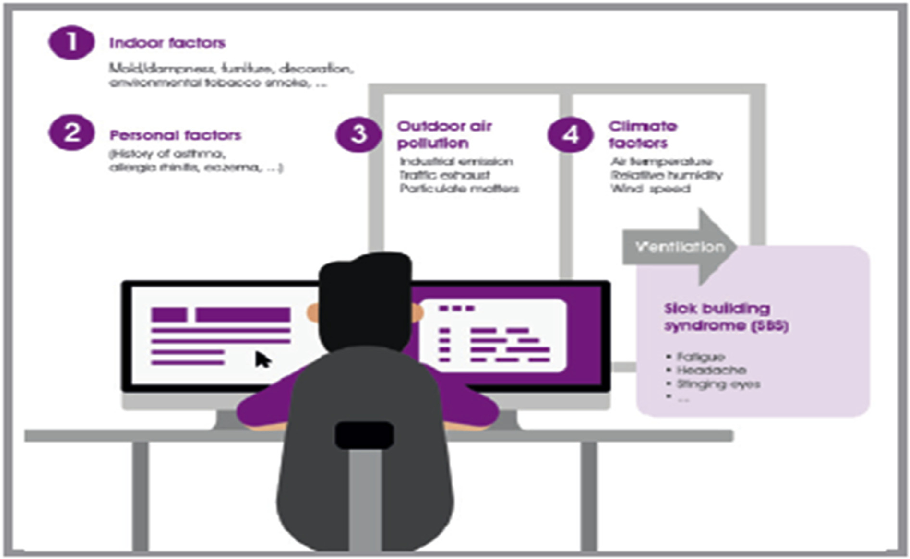
Figure 3
Expert consensus recommendations address the clinical management of allergic rhinitis aggravated by air pollution. This figure summarizes therapeutic strategies including pharmacological interventions and environmental exposure reduction.
diagram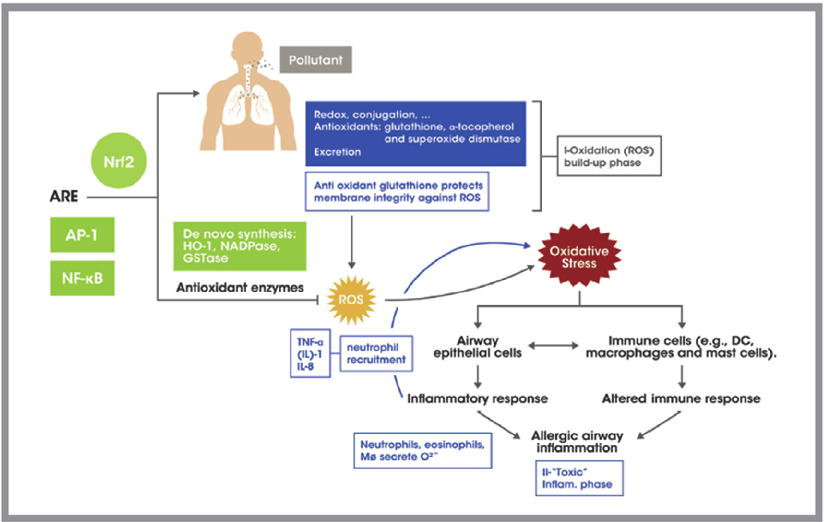
Figure 4
Air pollutants generate oxidative stress in the airway, driving allergic inflammation through the Nrf2 antioxidant response element pathway. This diagram illustrates how pollutant-induced reactive oxygen species activate the oxidative stress cascade, contributing to allergic airway disease.
diagramFigure 2
DiagramSource Paper
International expert consensus on the management of allergic rhinitis (AR) aggravated by air pollutants: Impact of air pollution on patients …Cite This Figure
 > Source: Robert Naclerio et al. "International expert consensus on the management of allergic rhinitis (AR) aggra." *The World Allergy Organization journal*, 2020. PMID: [32256939](https://pubmed.ncbi.nlm.nih.gov/32256939/)
<figure>
  <img src="https://pdfs.citedhealth.com/figures/32256939/119.png" alt="Diesel exhaust particles, nitrogen oxides, particulate matter, ground-level ozone, and volatile organic compounds interact with allergens to worsen allergic rhinitis. This figure maps how these pollutants enhance house dust mite sensitization and modulate allergic airway responses." />
  <figcaption>Figure 2. Diesel exhaust particles, nitrogen oxides, particulate matter, ground-level ozone, and volatile organic compounds interact with allergens to worsen allergic rhinitis. This figure maps how these pollutants enhance house dust mite sensitization and modulate allergic airway responses.<br>  Source: Robert Naclerio et al. "International expert consensus on the management of allergic rhinitis (AR) aggra." <em>The World Allergy Organization journal</em>, 2020. PMID: <a href="https://pubmed.ncbi.nlm.nih.gov/32256939/">32256939</a></figcaption>
</figure>