Description
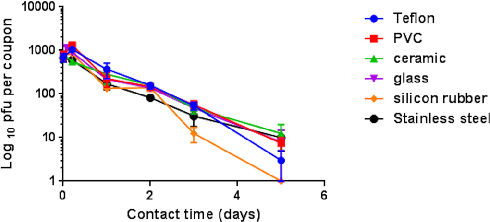
Viral titer decay curves on stainless steel and other metal surfaces demonstrate that coronavirus 229E can remain infectious for several days under ambient conditions.
More Figures from This Paper
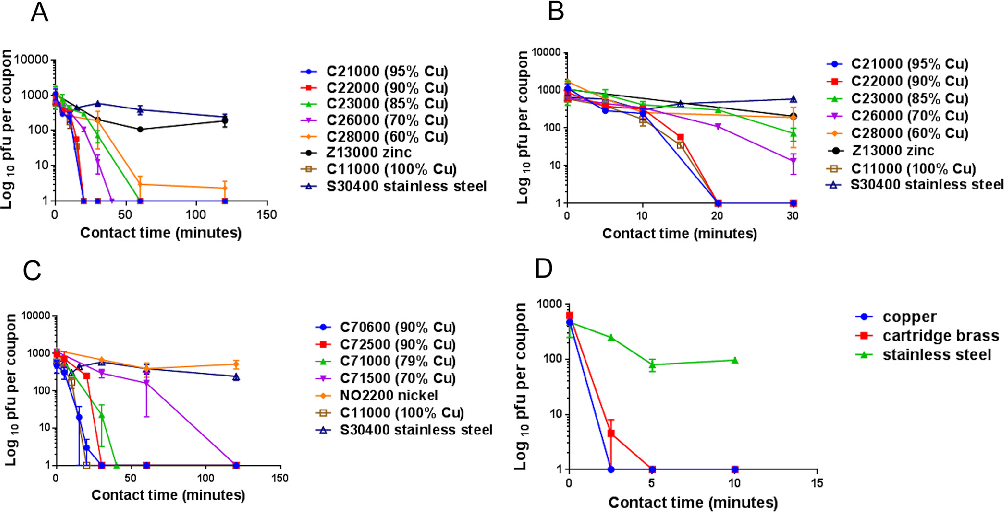
Figure 4
Comparison of coronavirus inactivation rates across polymer-based surfaces including PVC, silicone rubber, and Teflon shows material-dependent variation in viral survival.
chart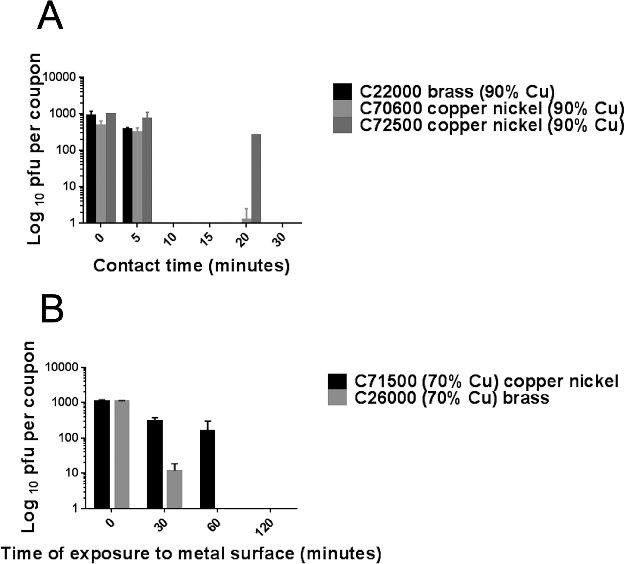
Figure 5
Temperature and humidity effects on coronavirus 229E survival on surfaces are displayed, with higher temperatures generally associated with faster viral inactivation.
chart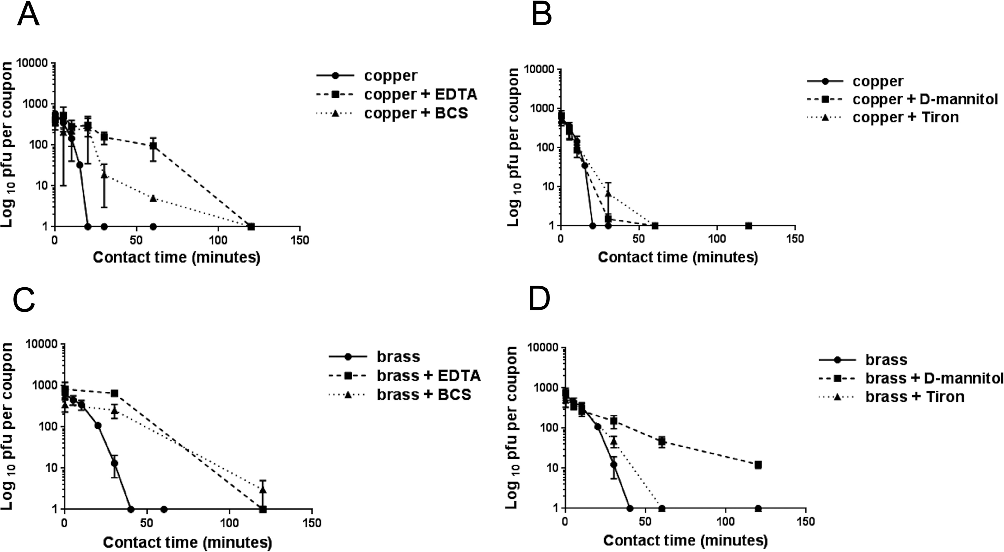
Figure 6
Scanning electron microscopy or surface characterization images of the tested materials are presented alongside their corresponding viral persistence data.
photograph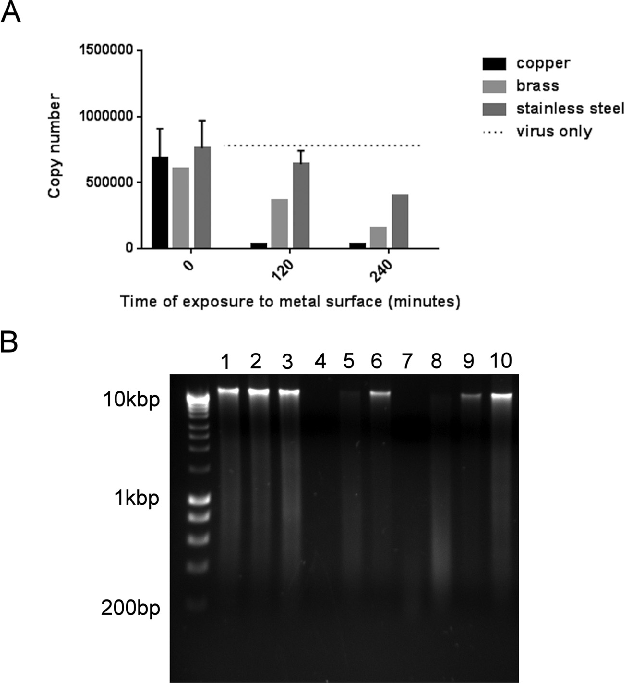
Figure 7
Recovery efficiency controls for the surface sampling methodology are shown, validating the quantitative viral titer measurements across different material types.
chart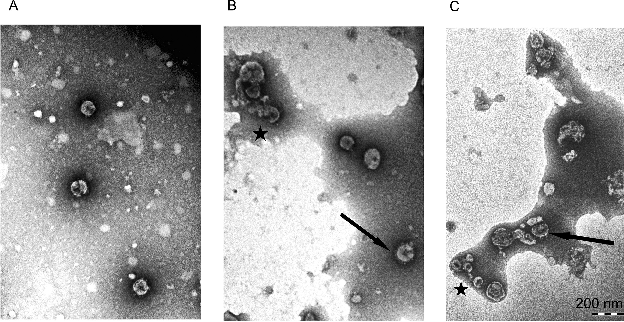
Figure 8
Summary comparison of coronavirus 229E persistence across all tested surface materials, ranked by duration of detectable infectivity.
chartFigure 3
ChartSource Paper
Human Coronavirus 229E Remains Infectious on Common Touch Surface Materials.Cite This Figure
 > Source: Sarah L Warnes et al. "Human Coronavirus 229E Remains Infectious on Common Touch Surface Materials.." *mBio*, 2015. PMID: [26556276](https://pubmed.ncbi.nlm.nih.gov/26556276/)
<figure>
  <img src="https://pdfs.citedhealth.com/figures/26556276/90.png" alt="Viral titer decay curves on stainless steel and other metal surfaces demonstrate that coronavirus 229E can remain infectious for several days under ambient conditions." />
  <figcaption>Figure 3. Viral titer decay curves on stainless steel and other metal surfaces demonstrate that coronavirus 229E can remain infectious for several days under ambient conditions.<br>  Source: Sarah L Warnes et al. "Human Coronavirus 229E Remains Infectious on Common Touch Surface Materials.." <em>mBio</em>, 2015. PMID: <a href="https://pubmed.ncbi.nlm.nih.gov/26556276/">26556276</a></figcaption>
</figure>